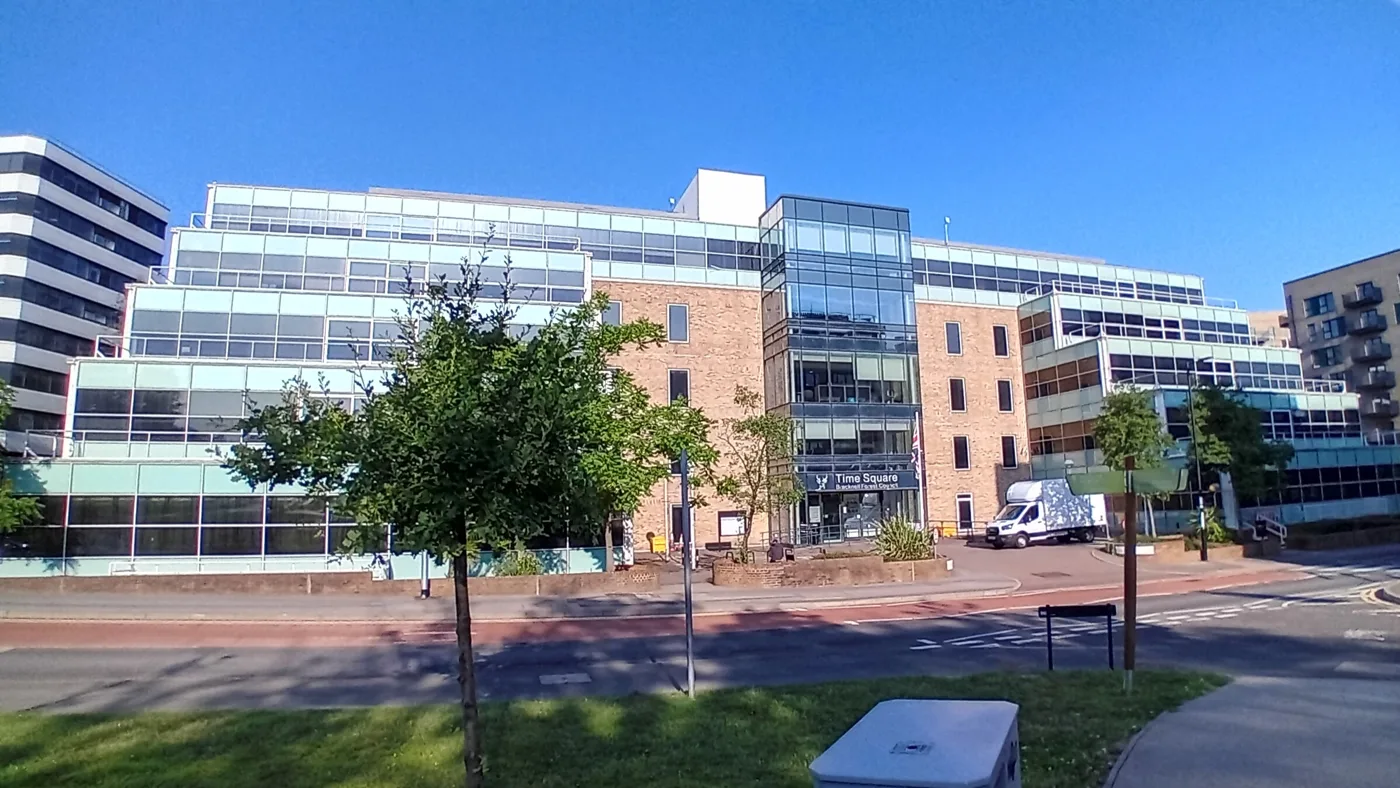

Two councillors rejoined Labour on 13 July, ending the Independents Group. Committee seats are reallocated at Full Council on 9 September.
Bracknell Forest’s Labour group is back up to 20 councillors, exactly half the council, after two members who had been sitting as Independents rejoined it. The council has to redraw its committee seats as a result, and does so at Full Council on Wednesday 9 September.
The report to Council records that notification was received on 13 July 2026 that Councillors Bailey and Temperton had rejoined the Labour group. Because those two were the whole of the Independents Group, it “has ceased to exist as a political group for the purposes of the Council’s political balance and appointment arrangements”.
The council’s member index now lists both under Labour: Councillor Roy Bailey for Town Centre and The Parks, and Councillor Mary Temperton for Great Hollands. The Leader of the Council, Councillor Helen Purnell, is also Labour.
That leaves the 41-seat council looking like this:
What it means for you
Very little changes in what the council does, and nothing changes about bins, council tax or planning rules. What changes is who sits on the committees that decide things, and how safe the administration’s position is when a vote is close.
Labour is the largest group and runs the council, but 20 of 41 is not an overall majority: that needs 21. On the Planning Committee, the group that most affects residents directly, Labour is allocated 6 of the 12 seats. Half, not more.
The committee seats being redrawn
Under the Local Government and Housing Act 1989 the council has to review seat allocations whenever group membership changes, and hand each group a share that reflects its size. The proposed allocation across the four ordinary committees is 45 places in total.
| Committee | Seats | Lab | Con | Lib Dem | Green |
|---|---|---|---|---|---|
| Appeals Committee | 11 | 5 | 3 | 2 | 1 |
| Appointment Committee | 5 | 3 | 1 | 1 | 0 |
| Employment Committee | 9 | 4 | 2 | 2 | 1 |
| Governance and Audit Committee | 8 | 4 | 2 | 1 | 1 |
| Planning Committee | 12 | 6 | 3 | 2 | 1 |
| Total | 45 | 22 | 11 | 8 | 4 |
Labour’s strict proportional entitlement across those 45 places is 22.25, so its 22 seats are marginally below what the arithmetic gives it. The Conservatives are entitled to 11.25 and get 11, the Liberal Democrats to 7.88 and get 8, the Greens to 3.38 and get 4.
Three other bodies are counted separately from that total, because they are not ordinary committees:
- Licensing and Safety Committee, 15 seats: Labour 7, Conservative 4, Liberal Democrat 3, Green 1.
- Overview and Scrutiny Commission, 12 seats: Labour 6, Conservative 3, Liberal Democrat 2, Green 1.
- The three Overview and Scrutiny panels, 9 seats each: Labour 4, Conservative 2, Liberal Democrat 2, Green 1. The report says these appointments are unchanged by the review.
The single ungrouped councillor is recorded with a proportionality of 0 per cent. The Act allocates seats to political groups, and one councillor sitting alone is not a group.
The knock-on for substitutes
There is one further consequence of Labour passing 18 members. The council’s constitution sets the number of substitutes a group may appoint by its size: three for a group of fewer than 11, four for 11 to 17, and five for a group of 18 or more. Labour at 20 sits in the top band.
Councillor Bailey is named in the schedule of appointments as one of Labour’s six members of the Overview and Scrutiny Commission.
The report carries no financial implications. Committee costs, it says, are met from existing budgets.
Sources
- Review of Political Balance and Committee Appointments, report to Council, 9 September 2026, for the 13 July notification, the group numbers, every seat table and the substitute bands.
- Appendix A, schedule of appointments 2026-27, for the named membership of each committee and panel.
- Council agenda, 9 September 2026, for the full running order of the meeting.
- Bracknell Forest councillor index, for each councillor’s party and ward.
More local information
- Bracknell council tax bands: what the council charges in each band.
- Bracknell planning applications: what the Planning Committee is deciding.
- Bracknell bin collection days: your round and what to put out.
Have your say