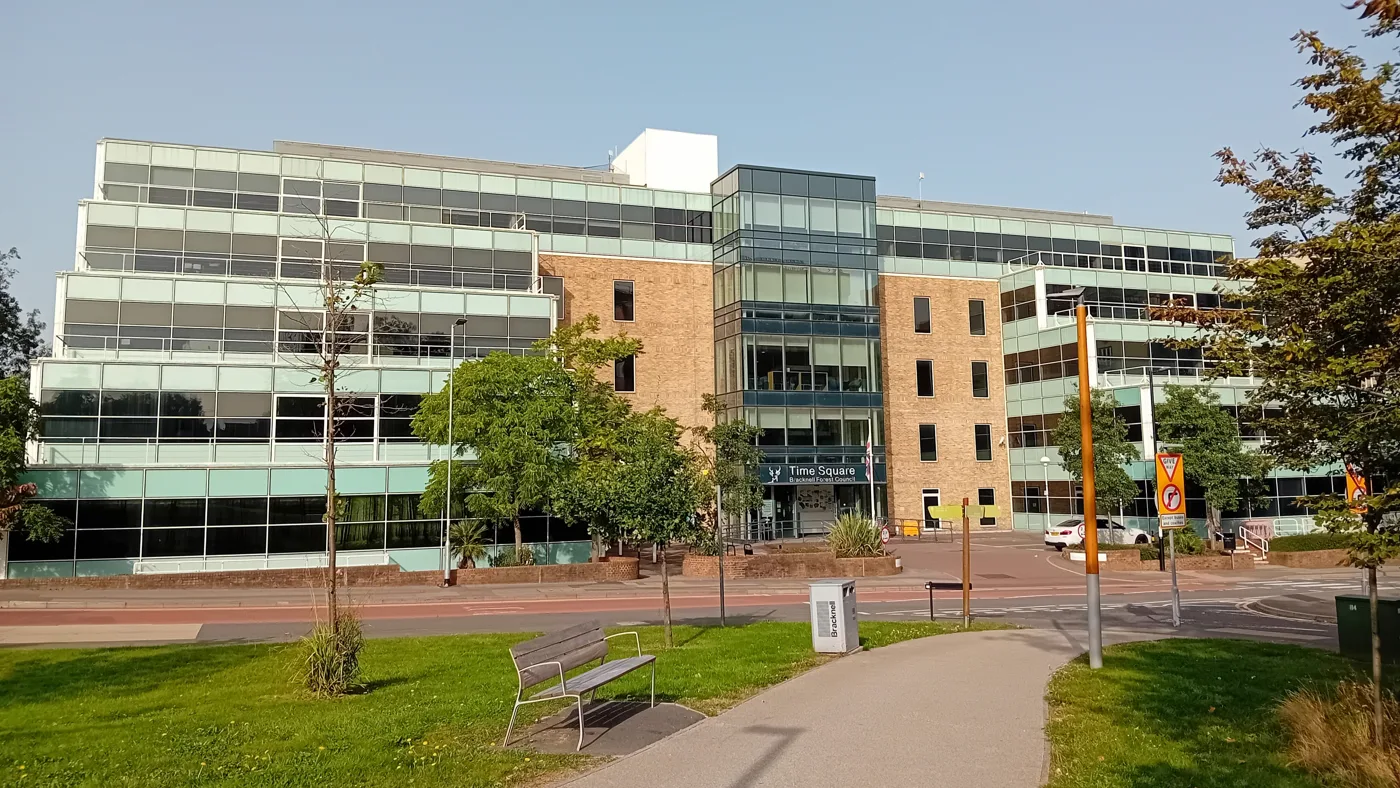

The council's own first quarter report flags a potential £5.16m overspend, £2.4m of it in children's social care. Scrutiny sees the figures on Thursday.
Bracknell Forest Council is on course to spend £5.160m more than it budgeted this year, according to its own first quarter performance report.
The figure is published in the Council Plan Overview Report for April to June 2026, which goes to the Overview and Scrutiny Commission on Thursday 3 September. Councillors are asked to review it before it reaches the Cabinet.
The council’s approved cash budget for 2026/27 is £130.714m, including a £2.5m corporate contingency. A £3.552m transfer from earmarked reserves brings the overall total to £127.162m.
Two numbers, and the gap between them
The report gives two figures, and the difference matters.
- £0.671m is the variance departments have actually reported: expenditure above the approved budget, excluding the corporate contingency.
- £5.160m is what that becomes once “emerging issues” are added. The report describes these as pressures “that are likely to affect the position but cannot be accurately quantified at this point”.
The council is careful about the larger figure. Its own wording is that “experience from recent years has been that a large proportion of the risks identified early in the financial year are able to be managed during the year”.
That is not the same as saying it will not happen. The Corporate Management Team is discussing scenarios with cabinet members “to ensure the overall budget is not overspent by the year end”.
Where the £5.16m sits
Almost three quarters of it is in one directorate.
Inside the People directorate the figure breaks down as:
- children’s social care, £2.402m
- adult social care, £0.623m
- education and learning, £0.360m
- early help and communities, £0.168m
- commissioning, £0.095m
- the executive director’s own budget, £0.016m
Ten placements, most of the budget
The single largest identified pressure is children’s residential care.
Placement costs for children looked after, excluding care leavers and asylum seekers, are forecast to overspend by £1.458m. The report then gives a figure that explains why the service is so hard to budget for.
“There are 100 residential placements with the cost of the 10 most expensive placements equating to 60% of the budget,” it says.
Two other pressures sit alongside it. The fostering budget is under pressure by £0.071m because it has historically overspent. Specialist support services are forecast to overspend by £0.057m.
Among the emerging issues, the council flags a general pressure of £1.406m on devolved staffing across the People directorate, with a further £0.120m for agency social workers in children’s social care. Adult social care names 33 young people with learning disabilities who have yet to turn 18 and will transition to adult services, at a potential £0.309m.
Fair Funding 2.0 and the £5m savings hunt
Separately from the in-year position, the council is trying to find £5m of savings during the year.
The reason it gives is the Government’s Fair Funding 2.0 changes, which it says add “pressure to future financial sustainability”. The savings are intended to reduce how much the council has to draw from reserves to balance its budget.
The three areas it is looking at are underspends carried over from 2025/26, additional income, and making fuller use of grants.
The other red flags
Two more indicators are rated red against forecast.
Housing completions. There were 87 net completions in the quarter against a forecast of 148, made up of 78 on large sites and 9 on medium sites. Small sites are not counted until the fourth quarter. The number of homes under construction fell slightly to 922, which still beats the annual forecast of 617.
Affordable housing permissions. The share of affordable units granted planning permission on qualifying sites was 0% against a 35% forecast, the same as the previous quarter. The report says none of the sites permitted in the quarter were qualifying sites under Policy LP 16 of the Bracknell Forest Local Plan. It also says 27 gross dwellings were granted permission on qualifying sites, 24 of them through the prior approval route where affordable housing cannot be required because of permitted development rights.
Recycling contamination. The share of blue bin collections that is incorrect stood at 19.0% against a 16.0% forecast, up from 18.7%. This indicator runs a quarter behind, so the figure is for January to March 2026. Contamination topped 20% in both January and February and fell to 12% in March. Of 14 recycling samples taken in January, three were more than 30% contaminated; one February sample was over 40%. Crews leave an advisory notice and do not empty a bin if they can see contamination near the top.
Despite that, the report records a 2025/26 recycling rate of 54.1% and landfill at 8.8%, both still subject to Defra verification.
What went the council’s way
The same report carries a set of green indicators, and they are not trivial.
- 26 affordable homes were completed in the quarter, against a forecast of 25.
- Recorded crime, excluding fraud, ran at 53.0 per 1,000 for headline offences year to date, against a forecast of 60.0.
- The share of care leavers aged 19 to 21 not in education, employment or training fell to 22%, against a 30% forecast, its lowest in more than two years.
- Everyone Active leisure sites recorded more than 401,000 visits in the quarter.
- The Youth Employment Hub met its target of supporting 140 residents aged 18 to 24 on Universal Credit into work, training, education or volunteering.
- A Local Government Association peer team, which visited in March, praised the council for good quality services and called it well regarded and innovative in housing and children’s social care.
What it means for you
Nothing on your council tax bill changes because of this report. It is a monitoring document for the current year, not a budget decision.
What it does tell you is where next year’s pressure will come from. A council that is hunting £5m of savings in September, on top of managing a potential £5.16m overspend, is a council that will be making choices about services in the new year budget round.
The meeting is on Thursday 3 September at 6.30pm in the Council Chamber at Time Square, Market Street, Bracknell RG12 1JD, and it is open to the public. The deadline for registering to speak has passed: the council requires notice in writing by midday at least three clear working days before a meeting. The full agenda and papers are online.
The report goes to Cabinet next. Cabinet’s next scheduled meeting is 22 September.
Sources
- Bracknell Forest Council, Overview and Scrutiny Commission agenda, 3 September 2026, for the meeting date, venue and item list.
- Council Plan Overview Report covering report, for the £5.160m figure, the £5m savings target, the Fair Funding 2.0 wording and the list of challenges and achievements.
- Council Plan Overview Report, quarter 1 2026/27, for the budget tables, the directorate variances, the children’s placement figures and every performance indicator quoted.
- Bracknell Forest Council, speaking at overview and scrutiny meetings, for the notice requirement.
Related
- Bracknell council tax bands 2026/27: what a band D bill is now, and how the six parishes differ.
- Bracknell planning news: the borough’s housing land supply position.
- Bracknell bin collection days: what belongs in the blue bin.
Have your say