

A flat £20 a week disability allowance would cut care bills for 650+ people; self-funders and some with sensory needs may pay more. Cabinet: 13 October.
More than 650 people who pay towards their care in Bracknell Forest should be better off under a new charging policy. About 35 could pay more.
Those are the council’s own estimates. They are in the impact assessment for a draft Adult Social Care Charging Policy, which goes to Cabinet next Tuesday, 13 October (Bracknell Forest Council, Cabinet agenda, 13 October 2026).
Cabinet is not being asked to bring the changes in yet. It is asked to approve the draft and open a 12-week public consultation. The results come back to Cabinet before anything changes (Cabinet report). The draft’s own version history pencils in April 2027, with a question mark.
What would change
The draft makes three changes that affect what people pay (draft policy, Annex A):
- A standard £20 a week for disability costs. Anyone on a disability benefit who is assessed to pay towards their care would have £20 a week set aside automatically. It is not a cap: people can still ask for their actual costs to be assessed in full, at any time.
- Charging for people with a primary sensory need. The report says charges will be aligned with “all eligible service types” under the Care Act, naming “those with a primary sensory need”. The impact assessment describes some of the people affected as “previously exempt from charging”.
- Fees for self-funders who ask the council to arrange their care. These are people with more than £23,250 in savings and assets, not counting their home. The council has the power to charge them a fee, but the report says its policy and public information “do not fully reflect this position”.
The draft also refreshes the weekly limits on individual disability costs, which were last set in the current policy’s 2022 version.
Why the £20 matters
At present, disability-related expenditure is allowed for people on Attendance Allowance, the care part of Disability Living Allowance, or the daily living part of Personal Independence Payment. The council can ask for receipts, and if a person has been asked to keep them and does not, a doubtful cost is left out (current charging policy).
The money set aside for these costs is not counted as income the person can spend on care. So a bigger allowance means a smaller weekly charge.
The draft says the flat £20 is meant to keep assessments from being “overly intrusive or complex”. It recognises that people “may not wish to disclose or discuss” what their disability costs them. Claims above £20 will still need evidence. Where receipts are not possible, officers will consider other evidence.
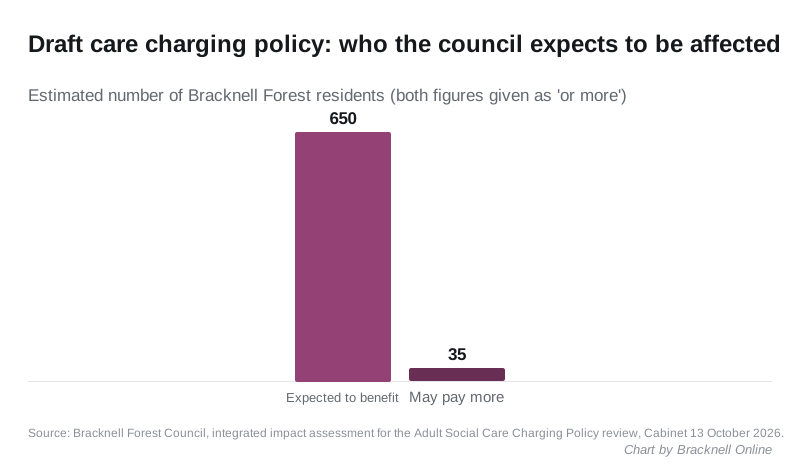
The impact assessment expects “an increase in disposable income” for most people affected (integrated impact assessment). It puts the numbers at:
- 650 or more residents expected to benefit
- 35 or more who “may be required to contribute more”
Both figures are estimates, written with a plus sign. The report says a fuller analysis will follow as the policy develops.
The weekly limits being updated
The draft keeps the list of example disability costs and raises the weekly ceilings. The draft says its figures are 2026/27 rates. These are the ones with a fixed weekly maximum:
| Cost | Current policy (2022) | Draft policy (2026/27) |
|---|---|---|
| Privately arranged care | £13.70 | £16.78 |
| Gardening | £14.00 | £16.57 |
| Additional laundry | £5.83 | £6.45 |
| Special clothing or footwear | £5.84 | £7.14 |
| Special dietary needs | £3.95 | £4.84 |
| Frequently replaced bedding | £2.19 | £2.67 |
Sources: Appendix A of the current policy and of the draft policy. Other items, such as private domestic help and chiropody, are allowed at actual cost.
Who could pay more
The report does not say how much more the 35 or so people might pay, or how many are in each group.
For self-funders, the draft points to the council’s separate fees and charges document. The version on the council’s website, last revised in 2023, lists (Bracknell Forest Council, fees and charges for adult social care):
- £372 to set up care arrangements
- £246 a year for ongoing management of those arrangements
Neither the report nor the draft says whether those amounts will change.
The council’s finance adviser says the changes are “not anticipated to impact negatively on the overall level of income received by the Council”.
Why now
The council’s policy dates from 2015. Since 2016 it has mostly been updated once a year to refresh the disability cost figures, most recently in April 2022.
The draft says its new approach to disability costs follows “the Norfolk 2020 Judgement”. That was a High Court case over Norfolk County Council’s charging rules. The report lists the risks of not updating as legal challenge, ombudsman findings, undercharging, and residents being “charged inconsistently or unfairly”.
Cabinet is also asked to let the Executive Director: People make “minor amendments” to the policy for up to five years, in consultation with the Cabinet member.
What it means for you
- If you already pay towards your care, you should hear from the council directly. The report says it will contact everyone currently receiving a financial assessment about the consultation.
- If you have high disability costs, you do not have to accept the £20. Under the draft you can ask for a full assessment of your actual costs at any time. Keep receipts.
- If you have savings over £23,250 and the council arranges your care, the fee rules are the part to read closely.
- If you or a relative has a sight or hearing impairment and gets council-arranged care, check whether the change on sensory needs applies to you.
- The consultation will also go through the Dementia Forum and the Learning Disability and Autism Forum, with accessible versions, and on the council’s website.
Cabinet meets at 6.30pm on Tuesday 13 October in the Council Chamber at Time Square, Market Street. The meeting is public. The council’s paying for care page has the current rules. For other council charges, see our council tax bands guide.
Have your say